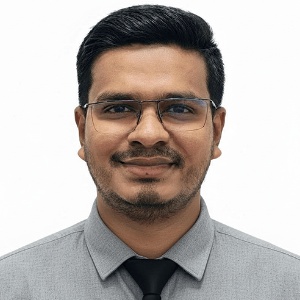
Dr. Md Ruhul Amin
Professor FB About: Research interest: ResearchGate:0
Google Scholar:Academic / Faculties / Faculty
Professor
ID: 210217
Professor
ID: 210220
Professor
ID: 210219
Chairman & Associate Professor
ID: 210221
Associate Professor
ID: 210218
Assistant Professor
ID: 210222
Lecturer
ID: 210223
Lecturer
ID: 210224
0
Google Scholar:Dr. Md. Bokhtiar Hasan is an Associate Professor in the Department of Economics & Finance at the University of Nizwa, Oman, as well as in the Department of Finance & Banking at the Islamic University, Bangladesh (Lien). He is also a Research Fellow (Honorary) at the Institute of Business Research, University of Economics Ho Chi Minh City, Ho Chi Minh City, Vietnam. His career began in banking at Al-Arafah Islami Bank in 2009, followed by research roles at the Dhaka Stock Exchange in 2010, where he later became a senior executive. Before joining the Islamic University, he held a senior executive position in Research at the Dhaka Stock Exchange. He was also an adjunct faculty member at the Department of Business Administration, BAUET, Bangladesh. He has led and collaborated on research projects funded by institutions including the Asian Development Bank, SAMA (Saudi Arabia), Abu Dhabi University, Bank Indonesia, Fulbright University Viet Nam, North-South University, University Grant Commission (UGC), etc. Mr. Hasan teaches undergraduate to postgraduate courses covering Business Finance, Corporate Finance, Financial Management, Capital Budgeting, Financial Derivatives, Security Analysis and Portfolio Management, Financial Institutions and Markets, and Econometrics. His research interests are Ethical Finance, Financial Economics, Energy Economics, Commodity Markets, Fiscal Policy, Climate Finance, Climate and Economic Resilience, Safe Haven, and Financial Crisis. He has published over 36 papers in top-tier finance and economics journals (indexed by ABDC, ABS, Scopus, or SSCI): Energy Economics (ABDC-A*, ABS-3*, Q1), Economics Letters (ABDC-A, ABS-3*, Q1), Annals of Operations Research (ABDC-A, ABS-3*, Q1), International Review of Economics & Finance (ABDC-A, ABS-2*, Q1), Finance Research Letters (ABDC-A, ABS-2*, Q1), Pacific Basin Finance Journal (ABDC-A, ABS-2*, Q1), Global Finance Journal (ABDC-A, ABS-2*, Q1), etc. Several papers are under review in top finance and economics journals. Mr. Hasan has reviewed many papers for top-tier finance journals like Energy Economics, International Review of Financial Analysis, International Review of Economics & Finance, Pacific-Basin Finance Journal, & International Journal of Finance and Economics, etc. Besides, Mr. Hasan presented several papers at over 15 international conferences. He is also a regular columnist and mainly writes about economic and stock market issues.
Research interest:Ethical Finance, Sustainable Finance, Financial Economics, Energy Economics, Commodity Markets, Cryptocurrency, Safe Haven, Uncertainty, and Financial Crisis.
ResearchGate:https://www.researchgate.net/profile/Md-Hasan-122
Google Scholar:https://scholar.google.com/citations?user=H7bVytsAAAAJ&hl=en
Professor Dr. Sutap Kumar Ghosh is a senior faculty member in the Department of Finance and Banking at Islamic University, Kushtia, Bangladesh. With over fifteen years of academic, research, and administrative experience, he has established himself as a prominent scholar in the fields of behavioral finance, investor psychology, financial regulation, corporate governance, and emerging capital markets. Professor Ghosh earned his PhD in Finance and Banking from Islamic University, where his doctoral research examined investors’ behavior in the Dhaka Stock Exchange. His scholarly contributions span a wide range of financial and socio-economic dimensions, focusing particularly on investor decision-making in developing and emerging markets. He has published extensively in internationally indexed and peer-reviewed journals, including several Scopus Q1, Q3, Q4, and ESCI – Web of Science publications. His research addresses critical issues such as market uncertainty, trading practices, financial disclosure, green banking, and risk tolerance. Professor Ghosh has also contributed book chapters to international conference volumes and has been recognized with a Best Paper Award for his work on cognitive biases and investment intentions. In addition to his research accomplishments, Professor Ghosh has played a significant role in academic leadership. He served as Chairman of the Department of Finance and Banking (2017–2020), during which he oversaw academic programs, faculty development, curriculum reform, and student research supervision. He has also contributed to various university committees and coordinated postgraduate and professional programs, including the Evening MBA Program. Professor Ghosh is an active supervisor and mentor, guiding BBA, MBA, MPhil, and PhD students in diverse research areas. His UGC-funded research project on the role of overconfidence in students’ decision-making reflects his interest in interdisciplinary approaches and behavioral studies. He is frequently invited as a Keynote Speaker, Resource Person, and Plenary Session Participant at international academic events in India and beyond. His engagements reflect his commitment to knowledge dissemination, policy-oriented research, and international academic collaboration. Professor Ghosh possesses strong technical proficiency in R, EViews, SPSS, Stata, MS Excel, quantitative analysis, and econometric modeling, supporting his ongoing contributions to empirical financial research. Through his academic leadership, research excellence, and commitment to institutional development, Professor Dr. Sutap Kumar Ghosh continues to play a vital role in advancing financial research and higher education in Bangladesh.
Research interest:Behavioral Finance, Investor Psychology, Emerging Capital Markets, Banking Regulation, Corporate Governance, Green Banking.
ResearchGate:researchgate.net/profile/Sutap-Ghosh ResearchGate+1
Google Scholar:scholar.google.com/citations?user=vP-H-ZYAAAAJ&hl=en
0
Google Scholar:0
Google Scholar:0
Google Scholar:https://scholar.google.com/citations?hl=en&user=keLcTKQAAAAJ
Md. Feroz Khan is currently performing as a Lecturer at the Dept. of Finance and Banking, Islamic University, Kushtia-7003, Bangladesh. Mr. Khan has completed his graduation and post-graduation in Finance and Banking from Islamic University, Kushtia-7003, Bangladesh. For his excellent academic record in BBA (Hons) level (Faculty First), Mr. Khan has been nominated for the prestigious Prime Minister Gold Medal Award-2019. Mr. Khan has done a three-month internship programme from Dhaka Stock Exchange (DSE).
Research interest:Financial Risk Management, Bankruptcy Predictions, Non-performing Loan (NPL), Capital Market
ResearchGate:0
Google Scholar:https://scholar.google.com/citations?hl=en&user=KLbC6G0AAAAJ
This study examines the determinants of non-performing loans (NPLs) among macroeconomic and bank-specific factors for the Islamic and conventional banking sectors in Bangladesh. We implement a dynamic panel data model with a two-stage system GMM for the period 2010-2021. Among the bank-specific factors, this study finds that return on assets, return on equity, bank size, and inefficiency help to reduce NPLs. In contrast, gross loan growth, leverage, and capital adequacy ratios contribute to increasing NPLs. Among macroeconomic determinants, inflation, and GDP growth have a significant negative impact on NPLs. Moreover, unemployment and exchange rates are also found to be significant determinants of NPLs. At the bank level, growth in gross loans reduces NPLs in Islamic banks, while the opposite is true for conventional banks. Our findings have significant implications for depositors and regulators in making appropriate decisions.
2023-10-07 Click HereThe purpose of this study is to scrutinize the extent of forward-looking (FL) disclosures and explore the impact of corporate governance (CG) on FL disclosures in integrated reporting (IR) in the context of the banking industry in Bangladesh.
Twenty-two listed banks in the Dhaka Stock Exchange (DSE) are selected as a sample from 2018 to 2022. For content analysis purposes, the study has developed an unweighted self-constructed disclosure index with 58 items and extracted data manually from the integrated annual report. Furthermore, descriptive statistics is conducted to analyze the extent of FL disclosures, and a pooled ordinary least squares regression model is used to examine the impact of CG (directors’ ownership, institutional ownership, foreign ownership, board of directors, independent directors, female directors and audit quality) on the FL disclosures.
This study reveals that the banking industry’s average FL disclosure score is only approximately 43%, indicating a meager degree of disclosures in Bangladesh’s well-structured sector. This study also finds that directors’ ownership, foreign ownership, female directors and audit quality have a statistically significant and positive relationship with FL disclosures at a 5% significance level. By contrast, institutional directors and the board of directors have a substantial but negative impact on FL disclosures. However, the other exponential variable, independent directors, has no impact on FL disclosures.
This study has some limitations, such as: i) the sample size is restricted to 22 banks, whereas nearly 36 banks are listed in the DSE. The sample size should be increased for better results. ii) The study only considers the banking sector with a small sample, but other sectors have been omitted from the sample. iii) The data have been extracted from the annual report, but other relevant sources such as banks’ websites, prospectuses, press releases, and media releases are not considered. iv) Finally, the self-constructed unweighted disclosure index is affected by subjective judgment. For depth analysis, a weighted method for content analysis purposes will be applicable.
Since there is no specific guideline for FL disclosures, this study suggests that the practical implication is for the regulatory body and policymakers to take the initiative to design a framework for FL disclosures that will improve disclosure quality. Second, they can investigate the independent director’s role in the banking sector to discover the existence of old-boy network problems.